Airbnb Autosuggest
The Problem
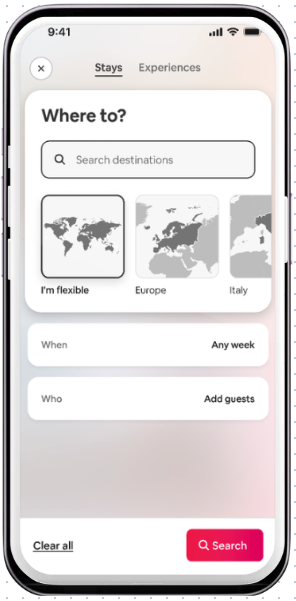
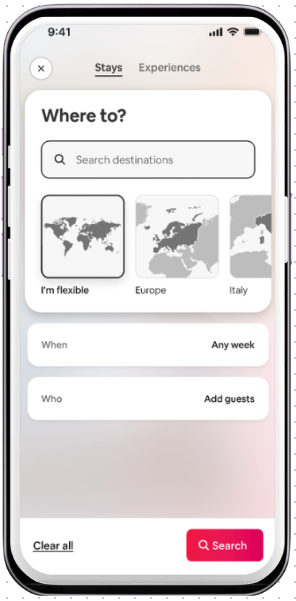
When guests search on Airbnb, the current experience surfaces broad destination suggestions such as countries or continents. While useful for exploration, these recommendations are not grounded in a guest’s recent searches, past trip behavior, or expressed preferences, which limits their relevance in more intent-driven moments.
This project focused on creating a more personalized approach to destination discovery by incorporating contextual signals to surface suggestions that better reflect what each guest is actively looking for.
Guests using Airbnb search often receive broad, generic destination suggestions that don’t reflect where they’ve recently searched, what they’ve previously booked, or what they seem interested in exploring.
As a result, the recommendations can feel disconnected from their intent, making it harder to quickly narrow in on relevant places and continue planning their trip.
Understanding how guests choose travel destinations
As a first step, I partnered with research to understand how guests decide where to travel. We found that specific landmarks and attractions, along with high-level location attributes (e.g., beach vs. snow destinations), were the strongest drivers of destination choice.
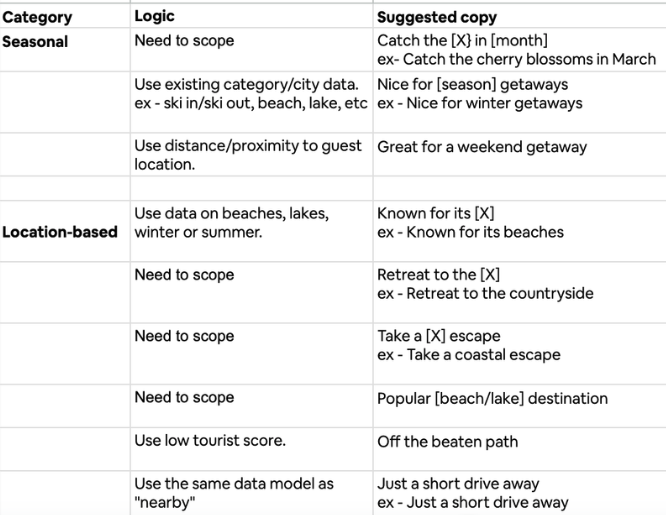
I used these insights to shape the initial copy and recommendation logic, then worked closely with engineering to assess feasibility, identifying what data already existed and what additional signals we would need to support more relevant suggestions.
Where we landed
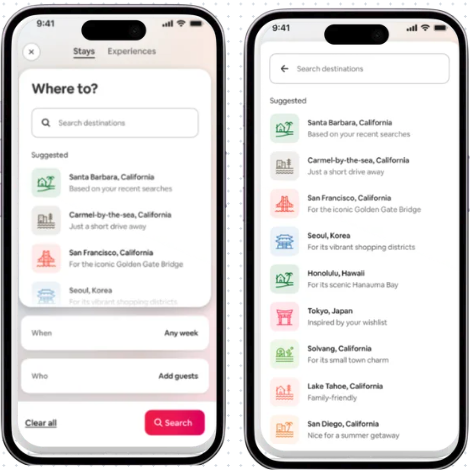
With our updated suggestions, we made a few key improvements:
Surface more specific city and country destinations (instead of broad categories)
Add a clear context line explaining why each destination is being shown
Expand context sources to include search and booking history, preferences, must-see landmarks, and seasonality
Improve the visual design with icons and color to increase scannability and engagement
We set out to move beyond generic labels like “popular,” which felt vague and unhelpful, and instead provide meaningful context for each recommendation. In testing, users found the destinations and explanations easy and enjoyable to browse, and said the suggestions felt realistic and aligned with trips they would actually consider.
Copy iterations
We explored several other categories that might prompt a user to visit a destination including:
Top 100 hotspots
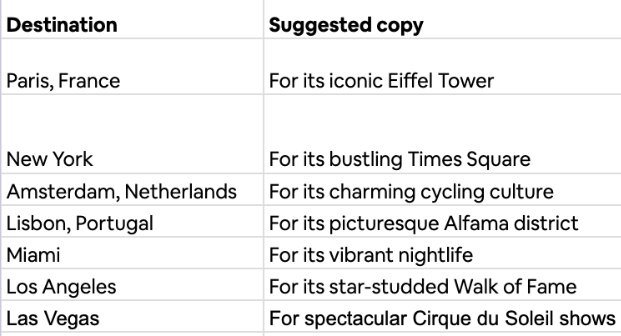
Using data on the most searched and booked destinations, I developed copy suggestions that surfaced specific landmarks and signature attractions within each location. Rather than defaulting to generic labels like “popular destination,” we focused on capturing what actually draws people to a city or country.
To the right are a few examples of the final direction we landed on.
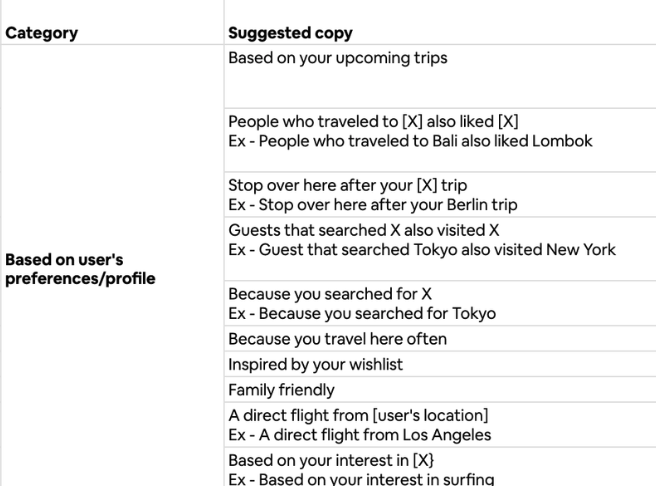
Personalized recommendations
With data on the most searched and booked destinations, I developed copy suggestions that surfaced notable landmarks and defining attractions within each city. Instead of defaulting to generic labels like “popular destination,” we aimed to express what actually makes each place compelling to travelers.
Here are a few examples of the directions we landed on:
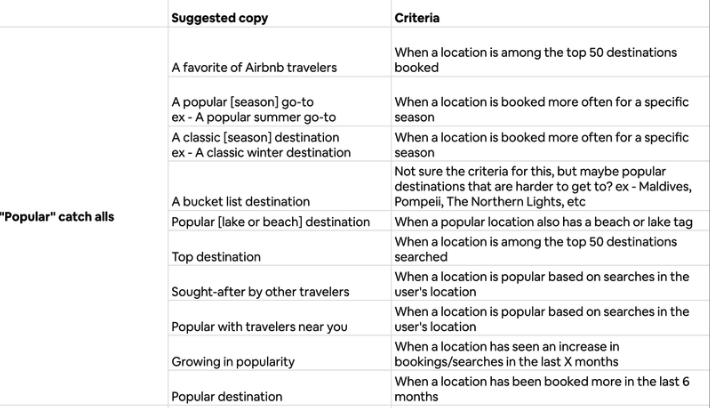
“Popular” recommendations
Our engineering team noted that we would need a robust set of fallback copy options for scenarios where we have limited or no user-level data (e.g., first-time visitors). The challenge was to design messaging and logic that still felt meaningful in these cases, rather than defaulting to generic labels like “popular” or “trending,” which lacked specificity and conviction.
To address this, we leaned into alternative signals such as social proof and broader destination appeal to keep the recommendations useful and grounded, even without personalization inputs.